Wondering why anyone would unschool their children? Well, here are lots of reasons why unschooling is a good choice. From the fun aspect, to the superior learning, to the avoidance of the unpleasant parts of school, this list gives you lots to think about if you are considering the unschooling approach to the education of your children.
A look at an unschooling family's approach to managing chores around the house. Although this approach may not work for everyone, the emphasis on flexibility and respect for each others needs and inclinations is enlightening.
In 1980, Marlene Bumgarner, a homeschooling parent, hosted author John Holt in her home while he was in California for a lecture tour. While he played in the garden with her two children, John and Dona Ana, she interviewed him for the bimonthly magazine Mothering. In this article, Holt answered such questions as, "What is your philosophy of learning?", "Why homeschool?", and "What about the child's social life?"
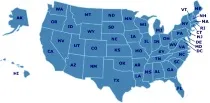
The Wild Azalea group is a secular, inclusive support group that provides support and activities for homeschoolers and their families in the New Orleans area. The Wild Azaleas have been in existence for over 14 years.
This was compiled from many of the wise voices of a great internet list called The Unschooling List. A great basic primer on the concept of unschooling.
The conversation around unschooling has been driven largely by parents. But as a generation of unschoolers grows up, they have given a voice to their experiences and how it has shaped the way the learn and the choices they make as adults. What has often been thought of as a fringe movement is now growing into a new way of looking at how education works and what improvements can be made.
An explanation of natural learning and the reasons for pursuing this in a family.
Patrick Farenga's discussion of the role John Holt played in the evolution of the homeschooling movement.
Here you'll find lots of links, resources, and explanations of unschooling to help you decide if this method of education is right for you and your family. Unschoolers Online provides detailed and helpful information on everything related to unschooling.
The term "unschooling" was coined by John Holt to mean not sending children to school. The term has been stretched and changed since then, and those of us who refuse the entire school model have taken the word "unschooling" for our own. Other terms associated with unschooling are natural learning, child-led learning, discovery learning, and child-directed learning. We don't divide our day into "school" parts and "non-school" parts, because there are no school parts. We live; we learn; we try new things; we go back to things we've loved a long time.
This group was created to support and connect unschoolers in Louisiana. Although secular in nature, unschoolers from all walks of life are welcome. Beside planning physical get-togethers, this group explores unschooling topics such as natural learning, respectful/mindful parenting, joyful living, freedom and autonomy, living by principles vs rules, convincing family, surviving panic and criticism, living without fear, non-coercive parenting, deschooling ourselves, and letting go of controls.
This is an inclusive, informal group for the Southwest Arkansas, East Texas, and Northwest Louisiana area. This group is available for homeschoolers who are not religious based, and who would like to meet on a regular basis for educational outings as well as social events for the children and adults alike. They meet for Park Days and schedule several inexpensive group field trips a month. Homeschoolers as well as unschoolers are welcome.
A look at unschooling as a philosophy of life from an African-American perspective.
Accompany 10 grown homeschoolers from around the country, ranging in age from 19 to 31, as they explore and candidly discuss the lasting influence home education has had on their lives. Produced and edited for the homeschooling community by a lifelong homeschooler, this documentary is a frank and often illuminating portrait of the triumphs and struggles homeschoolers face as children, teens and adults.
Texas Unschooling is the source for information on all things unschooling in Texas. At Texas Unschoolers, their mission is to educate and support those families who are exploring an alternative approach to life and learning. Many kids do very well outside the traditional public school model when they are allowed the time and resources to discover where their passions lie.
A mother of an exceptional child discusses why homeschooling is the right choice for their family. A personal look at the joys of learning and growing together through an unschooling philosophy of life.
A new study from Concordia University and Mount Allison University has found that homeschooling -- as long as it's structured or follows a curriculum -- can provide kids with an academic edge. "Structured homeschooling may offer opportunities for academic performance beyond those typically experienced in public schools," says first author Sandra Martin-Chang, a professor in the Concordia Department of Education, noting this is among the first nonpartisan studies to investigate home education versus public schooling.
Do Christian "natural learners" ("unschoolers") have a world view the same as other Christians? Some of them will, but not all.
This message board provides information, success stories, resources, and support for families who have chosen an unschooling approach to home education. Includes videos and podcasts links, stories and articles, and tool and resources.
Ask around at your next homeschool conference to compare what people answer when this question pops up: "What does it mean to unschool?" Some will answer that unschooling is homeschooling without using a pre-packaged curriculum. Others will say it's simply the degree of freedom that the parents allow the child in his learning. Still others will say that unschooling defies definition because each child is unique and will go at learning in his own way, in his own time. So what's the big difference between homeschooling and unschooling? In homeschooling the parents make decisions on how to best educate the child, while in unschooling the child somehow makes those decisions for herself.
Abandoning the institution of school and taking a natural learning approach is really a paradigm shift. Most people will not understand that natural learning does not involve children following a curriculum, taking exams, being socialised (through peers), using textbooks, etc. At best they will think that you are a bit daring, slightly unusual, experimenters.... at worst they will think that you are dangerous, putting your kids at risk or should be reported.... How can you show them that natural learning is OK?
What is the difference between unschooling and homeschooling? At one time they were just two terms for the same thing, so the question was like asking what the difference is between a car and an automobile. Today, homeschooling has remained a generic term while unschooling has come to refer to a specific type of homeschooling. So now the question is like asking what the difference is between a Ferrari and a car. Just what is it about unschooling that differentiates it from other types of homeschooling enough to warrant its own term?
This is a chart that explores the differences between traditional and natural learning. It compares how the child and parent are viewed, how learning occurs, the role of textbooks and curriculum, how learning disabilities fit in, and how various school subjects are viewed.
Traditional schooling operates on a set of beliefs whose errors have long been exposed. Its teaching is based on outmoded and ineffective concepts of the teaching-learning process. The reason for the failure of the traditional education system is, ironically, that uses "schooling." Children learn, not from schooling, but from living. And for them, living means playing.