Homeschooling Grows Up is the largest research survey to date of adults who were home educated. Over the last decade, researchers, professionals, parents, the media, and many others have asked repeatedly: How do homeschooled students turn out? Can a homeschool graduate get into college or get a job? How do they fit into society? Are they good citizens? Are they happy? In 2003, HSLDA commissioned Dr. Brian D. Ray, president of the National Home Education Research Institute, to conduct a study to answer these questions. The results of his research demonstrate that homeschoolers are succeeding.
Just suppose for a minute that in addition to our education, government officials suddenly took it into their heads to control what we eat? Some of the big wigs figured that we common ignorant folk were not capable of making good nutritious meals, so they formed a plan and with a huge chunk of our tax dollars, built government run cafeterias (Food Distribution Centers). Sound depressing? Well, take heart, because the American people would never stand for anyone telling them what they can and cannot eat. But wait a minute....isn't this exactly the approach the government has taken with education?
Children naturally love to learn. They want to know everything. "Daddy, why is the sky blue?" "Why can't I see my back?" "Why are those dogs doing that?" "Are we there yet?" And so on and so on. Then we send them to school. And all desire to learn is methodically destroyed. Many of today's citizens are products of the schools of the last twenty years, during which time the trend has been to adopt a more and more socialistic posture. Most teachers have never spent their lives anywhere except in classrooms, and their vision of the world is so much at odds with the real world of business and industry as to be virtually a different society.
Homeschooling is a time-honored and widespread practice. It often presents, however, a conflict between the constitutional right of parents to direct the education of their children and the State’s right to impose regulations in the interest of ensuring an educated citizenry. The U.S. Supreme Court has made it clear that any regulation impacting this constitutional right must be “reasonable.” Courts have therefore generally resolved homeschooling cases by examining whether State regulation of homeschooling places an unreasonable burden on the rights of parents. The courts, however, have altogether failed to address another, more fundamental question: whether the State regulation, in fact, advances the State interest. A regulation that fails this criterion cannot be “reasonable.” Using a recent California appellate court case that initially upheld a regulation prohibiting parents from homeschooling their children unless they first obtained a state teaching credential, we show how recent social science research should impact the analysis. Instead of assuming away the issue of whether the regulation advances the State interest, we show that empirical research will allow courts to be able to answer this threshold question.1
Not so! You absolutely can homeschool without a degree. Not only is it not required by most states that a homeschooling parent has a college degree, but it’s simply a misconceived notion that those without a college degree are not intelligent. Certainly that is not the case! The main requirement for homeschooling your children is a parent with a loving heart and a desire to give their child the best. You don’t need special training in child psychology. Remember, you know your child better than anyone else!
 Homeschool Bravely: How to Squash Doubt, Trust God, and Teach Your Child with Co...
 Top 20 Tips For Your Homeschool Preschool: Play-Based Homeschool Curriculum For ...
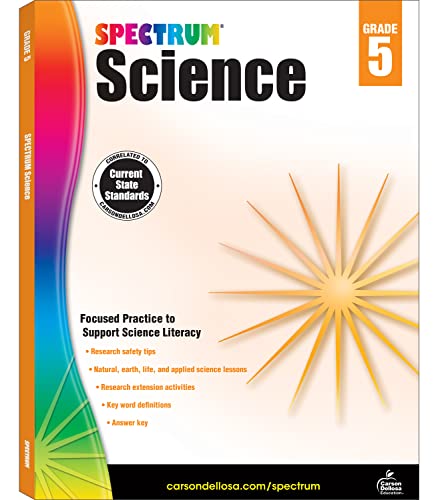
 Spectrum Grade 5 Science Workbook, Natural, Earth, Life Sciences, and More With ...
 A Beginner's Guide for Homeschooling: How to Set up a Successful Homeschool...
 So you think you want to homeschool...: Helpful tips, encouragement and personal...



 8 Great Smarts for Homeschoolers: A Guide to Teaching Based on Your Child's...
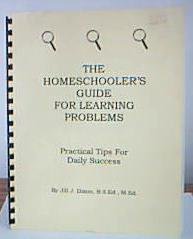
 The homeschooler's guide for learning problems: Practical tips for daily su...
 Launching Your Homeschool: Tips for getting started as a homeschooler
 Socialize Like A Homeschooler: A Humorous Handbook for Homeschoolers
 Becoming Homeschoolers: Give Your Kids a Great Education, a Strong Family, and a...